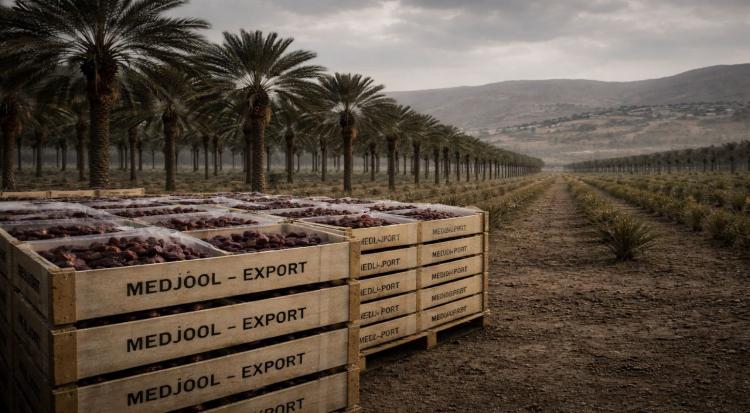
A large share — potentially up to 75% — of Israel’s Medjool date exports may originate from farms in West Bank settlements, according to trade analyses and advocacy groups examining agricultural production data.
Although settlements account for a relatively small portion of cultivated land, they are heavily concentrated in the Jordan Valley, a major hub for export-grade Medjool production. Researchers and campaign groups estimate that between 60% and 75% of Israel’s exported Medjool dates are grown in these settlements, raising renewed scrutiny during peak global demand periods such as Ramadan, when Medjool dates are widely consumed.
The United Nations and most of the international community consider Israeli settlements in the occupied West Bank illegal under international law — a position Israel disputes. The issue has intensified debate over product labelling, particularly in Europe, where a 2019 ruling by the EU’s top court requires settlement goods to be clearly identified and not labelled simply as “Made in Israel.”
However, Palestinian advocacy groups and some market monitors have accused Israeli exporters and distributors of relabelling or broadly labelling settlement-grown dates as Israeli products, making it difficult to distinguish whether they come from within Israel’s internationally recognised borders or from settlements. They argue that this complicates consumer boycotts, as buyers may unknowingly purchase goods originating from settlements. Israeli exporters deny any deliberate mislabelling and say they comply with trade and labelling laws.