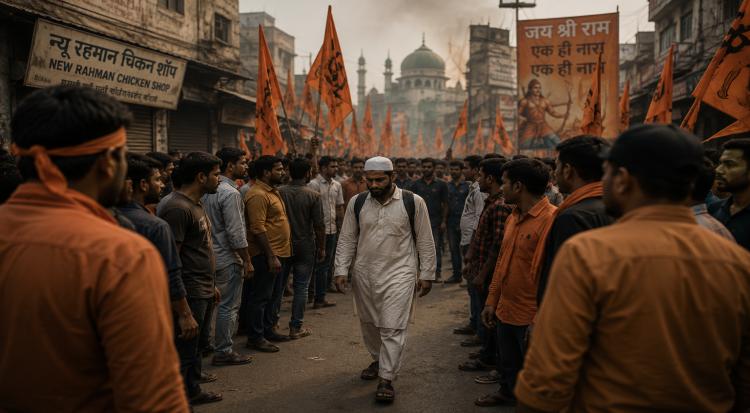
Hindutva is a Hindu nationalist political ideology that has become one of the most powerful forces in modern Indian politics, particularly under Prime Minister Narendra Modi and the ruling Bharatiya Janata Party (BJP).
The ideology promotes the idea that India is fundamentally a Hindu nation and that national identity should be centred around Hindu culture and traditions. Supporters present Hindutva as a movement focused on nationalism and cultural revival, but critics argue it has increasingly fuelled hatred, violence and intimidation against Muslims and other religious minorities.
In recent years, numerous incidents linked to Hindu nationalist mobs have drawn international concern. Videos circulating online have shown Muslims being beaten in public, attacked with sticks, humiliated, threatened and in some cases killed during communal violence. Rights groups and activists have accused extremist Hindu nationalist groups of encouraging mob violence and targeting Muslims through hate campaigns and religious intimidation.
Some incidents have involved Muslims being forced to chant Hindu slogans, accused of eating or transporting beef, or publicly assaulted over religious identity. Human rights organisations say anti-Muslim rhetoric has become increasingly normalised in parts of Indian political and media discourse.
The roots of Hindutva trace back to the early 20th century and nationalist thinker Vinayak Damodar Savarkar, whose ideology argued that India should primarily belong to Hindus. Critics warn that the movement’s rise has deepened religious divisions and increased fear among many of India’s Muslim communities.