

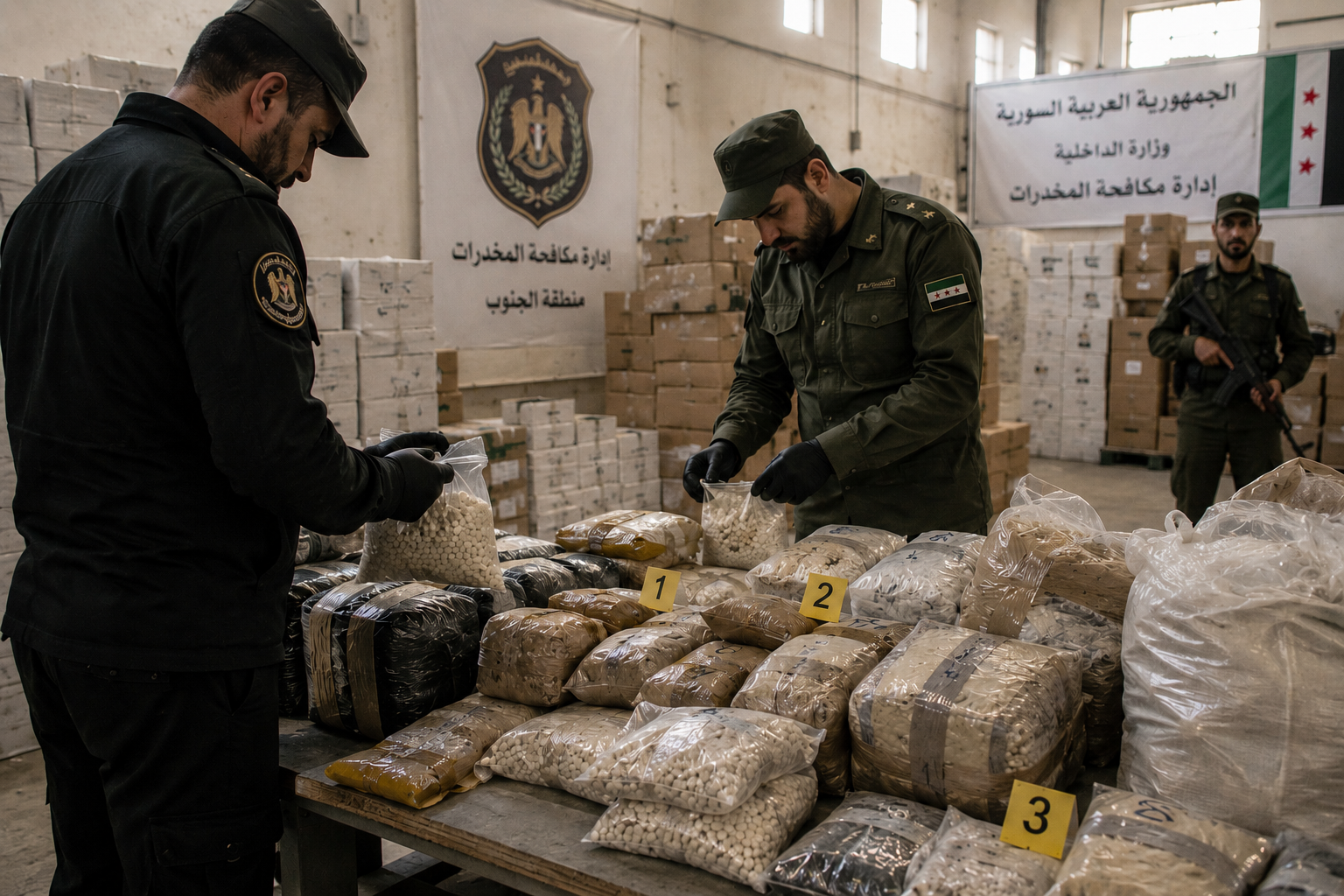
The fall of former Syrian president Bashar al-Assad has triggered significant changes in the country's Captagon trade, with trafficking networks increasingly shifting operations toward the southern province of Sweida.
For years, Syria's Captagon industry was widely linked to networks operating under the protection of influential figures and armed groups connected to the former government. Following Assad's removal from power, many of those structures were disrupted, creating opportunities for new actors to enter the trade and establish alternative smuggling routes. Sweida, located near Syria's borders with Jordan and other regional transit corridors, has emerged as an increasingly important hub. Residents, analysts and local sources describe a rapidly changing landscape in which trafficking groups have adapted to new political realities while continuing to move the highly profitable amphetamine-like drug across the region.
The shift has raised concerns among neighbouring countries, particularly Jordan, which has long battled attempts to smuggle Captagon across its borders. Security officials and regional observers say trafficking methods are evolving rather than disappearing, despite efforts to curb production and distribution. Experts warn that lasting reductions in the trade will likely require stronger border enforcement, economic alternatives for local communities and broader stability across southern Syria.
Since taking power, Syria's new authorities have announced a series of operations targeting Captagon production and trafficking networks, reporting multiple seizures and arrests. However, analysts and local observers say the continued movement of the drug through southern Syria highlights the challenges facing efforts to dismantle a trade that has become deeply embedded in parts of the country's economy and smuggling infrastructure.










