What Would Justice Look Like If There Were No Rohingya Left in Myanmar?
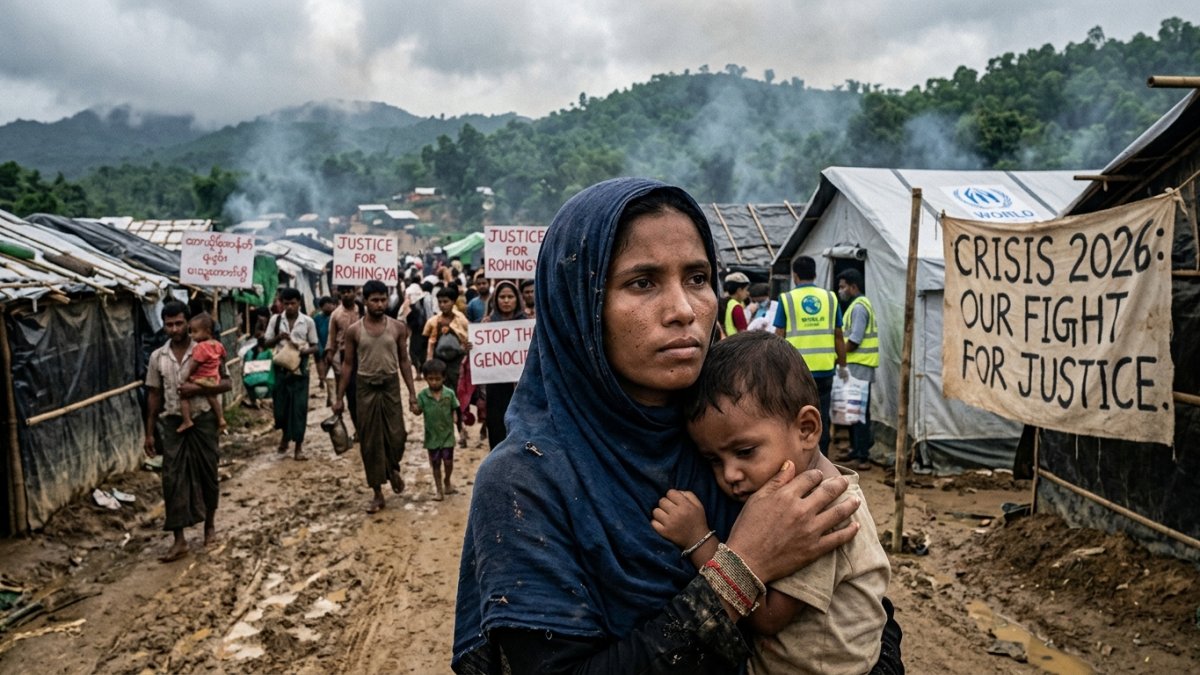
Nine years after the Myanmar military’s 2017 genocidal campaign forced more than 700,000 Rohingya to flee to Bangladesh, the persecution of the Rohingya has not ended.
Rohingya communities in Myanmar’s Rakhine State continue to face killings, forced recruitment and labour, detention, movement restrictions and sexual violence. The Arakan Army now controls much of Rakhine, including areas where many Rohingya live, but reports indicate that persecution has continued under its control.
More than 150,000 Rohingya have fled to Bangladesh since late 2023, adding to roughly 1.2 million people living in refugee camps. Humanitarian funding is declining, services are being cut and many Rohingya children are growing up without proper education or a secure future.
For those escaping Myanmar, the journey itself can be deadly. In July, two boats carrying more than 500 Rohingya sank after leaving Rakhine. At the same time, anti-Rohingya sentiment is increasing in some host countries.
Despite these conditions, international justice efforts are advancing. A universal-jurisdiction case in Argentina has led to arrest warrants for 22 Myanmar military officials and three civilians, including Senior General Min Aung Hlaing and General Soe Win. A major genocide case brought by The Gambia against Myanmar at the International Court of Justice is also approaching a judgment.
But legal proceedings alone cannot protect the Rohingya. Governments are being urged to enforce arrest warrants, impose coordinated sanctions on the Myanmar military and Arakan Army, restrict the flow of arms and resources enabling abuses, and increase humanitarian assistance.
The central demand of the Rohingya is not simply justice in courtrooms. They want the right to return safely to their villages, recover their land, regain citizenship and live as equal citizens without persecution.
After nine years of displacement and impunity, the warning is clear: justice will mean little if the Rohingya are driven completely from Myanmar.