Pete Hegseth, U.S. Secretary of War and media personality, has made statements in March 2026 describing Islam as a primary threat to the United States, sparking controversy over his rhetoric. In recent interviews, Hegseth suggested that ideological opposition from Islamist groups is a central concern, but critics note that his language effectively frames Islam as a monolithic enemy rather than targeting only extremist actors.
Hegseth has emphasized that threats come from both Sunni and Shia militant organizations, but many observers interpreted this as a broader generalization against Muslims as a whole. Analysts argue that such statements risk reinforcing stereotypes and feeding a narrative of religious conflict.
His remarks coincide with recent reports of U.S. military and political contexts where religion has been foregrounded in conflicts. Some Christian leaders have publicly offered prayers for Trump’s decisions in the region, and some military personnel have criticized messaging suggesting the U.S. campaign could be framed as a religious struggle against Islam. Hegseth’s rhetoric, critics contend, echoes this framing, contributing to a perception of the conflict as a religious “crusade.”
Supporters maintain that Hegseth is highlighting security threats posed by extremist groups rather than condemning Islam as a whole. However, his language has prompted debate over how rhetoric from media and military-adjacent figures influences public understanding of religiously charged conflicts.
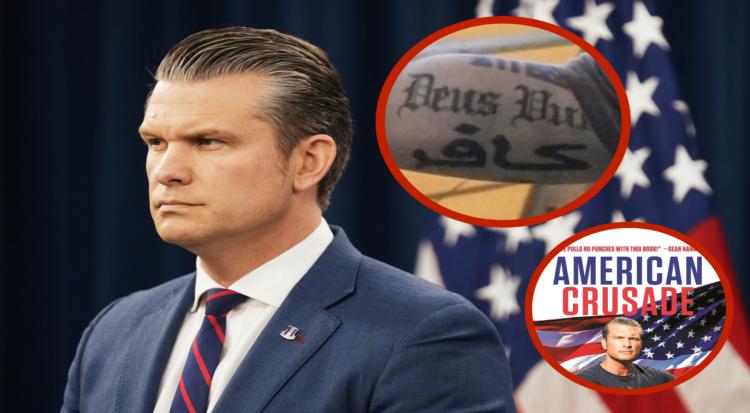
Pete has previously spoken about Islam and has an Arabic tattoo on his arm with the word كفر, which means Kafir or “disbeliever” in Arabic. This symbolizes his disassociation from Islam and his rejection of the faith. The tattoo holds particular significance because, according to Islamic teachings, toward the end of times, the false messiah — the Antichrist (Dajjal) — will bear these same letters on his forehead to signify that he is a disbeliever and to warn Muslims of his deception. Pete has also authored a book titled American Crusade, which encourages American patriots to go to war for their country and defend their national identity and culture.
Given this background, appointing someone with a clear ideological stance against Islam as Secretary of War raises serious concerns. It signals not only potential bias in defense policy but also risks deepening divisions at both national and global levels.