Iran Warns Gulf States Against Helping US as UAE Suspends Economic Ties
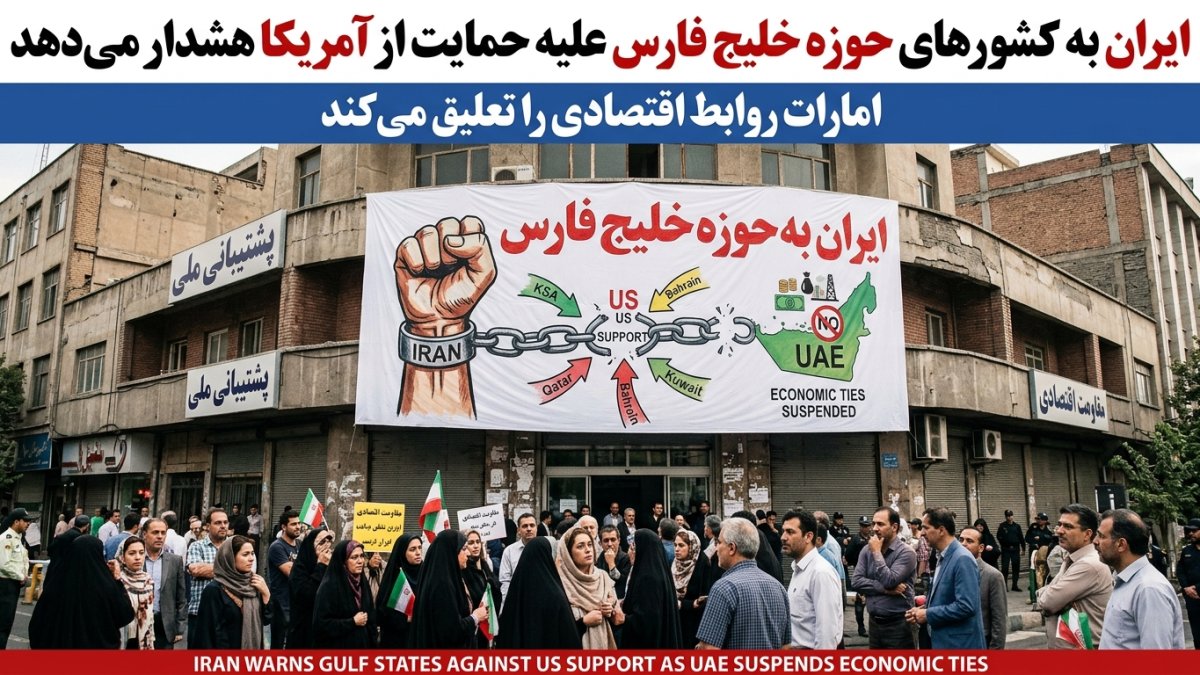
Iran has warned Gulf countries against providing military assistance or logistical support to the United States as tensions rise across the region, while the UAE has suspended economic dealings with Tehran.
Ali Abdollahi, chief of staff of Iran’s armed forces, said any assistance or facilitation provided to US forces would amount to participation in American military operations. He also questioned how US military aircraft, including refuelling planes, could operate from regional bases without the knowledge of host governments.
The warning comes amid reports that Saudi Arabia, the UAE, Kuwait and Bahrain may have been involved in attacks against Iran, although the Gulf states have largely denied such claims. Several of them host major US military installations.
UAE cuts economic ties with Iran
The UAE announced that it had halted trade, commercial exchanges and financial transactions with Iran until further notice. The decision followed Abu Dhabi’s claim that Iran had launched two ballistic missiles toward vessels off its coast. The UAE said both missiles fell into the sea, while Tehran rejected the allegation.
The UAE has already taken several steps against Iran during the conflict, including recalling its ambassador and closing Iran-linked schools and a hospital.
US reconsiders Gulf military presence
Washington is also reportedly reviewing its military footprint in the Gulf after Iranian missile and drone attacks on US facilities. US officials are considering whether some bases should be reduced or rebuilt to a lower level following the conflict.
The dispute is further complicated by the Strait of Hormuz, where Iran says the waterway will remain closed until US commitments are implemented, including an end to the naval blockade. President Donald Trump has meanwhile described the strategic waterway as “NEW U.S. Territory,” drawing sharp criticism from Tehran.
The developments highlight the growing pressure on Gulf states caught between their security partnerships with Washington, economic ties with Iran and the risk of being pulled deeper into the regional conflict.