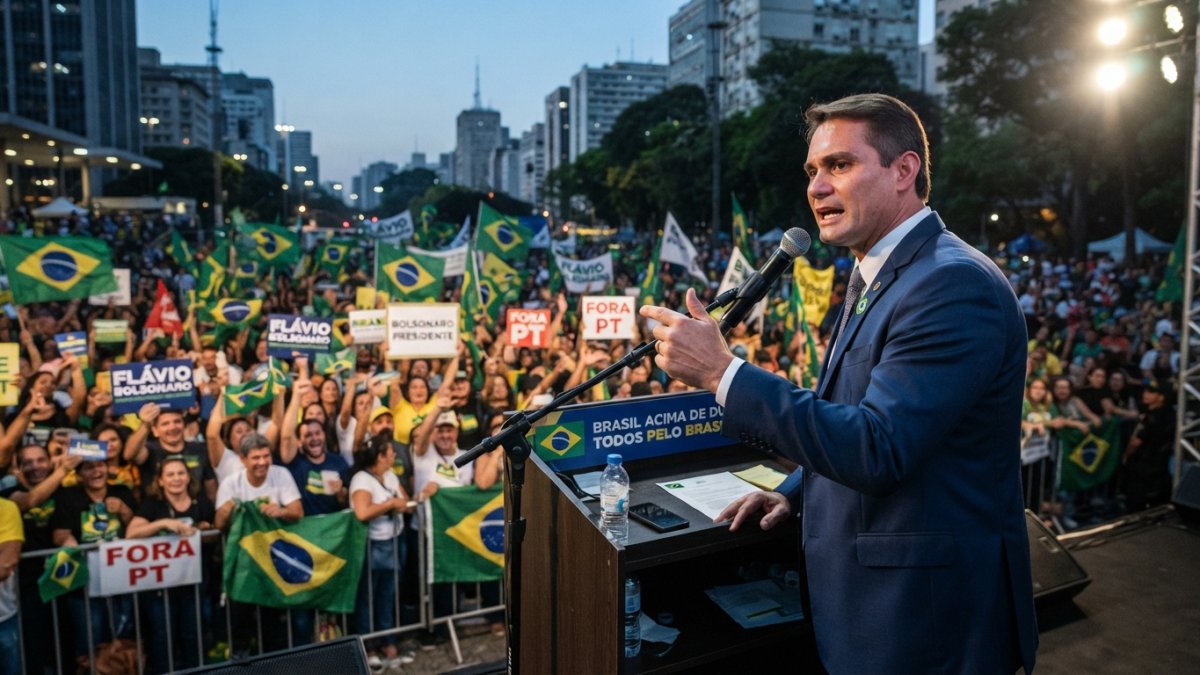
Right-wing Senator Flávio Bolsonaro finished ahead of incumbent President Luiz Inácio Lula da Silva in Brazil’s first-round presidential vote, setting up a runoff on October 25. Bolsonaro received 47 percent of the vote, compared with 45.1 percent for Lula. Neither candidate secured the majority needed to win outright.
A Result That Defied Polls
Opinion polls had suggested Lula would finish slightly ahead, making Bolsonaro’s narrow lead an unexpected result. The 45-year-old senator, son of former president Jair Bolsonaro, told supporters that the result showed Brazilians wanted political change.
The runoff now becomes a direct contest between the left-wing incumbent and the candidate of the Bolsonaro family’s Liberal Party. Around 30 million voters, or roughly 21 percent of the electorate, did not participate in the first round, leaving turnout as one factor in the next stage.
Conservative Votes Could Decide the Contest
International relations professor Oliver Stuenkel said the runoff arithmetic could favour Flávio: the other candidates drew nearly 8 percent combined, and most were centre-right, making their supporters less likely to shift to Lula. Stuenkel also said Lula would need to mobilise more of the voters who stayed home. These are campaign assessments, and the runoff result remains undecided.
The election also reflects a wider political division over Brazil’s direction and its relationships with the United States and China. Voters will make the final choice when they return to the polls on October 25.