

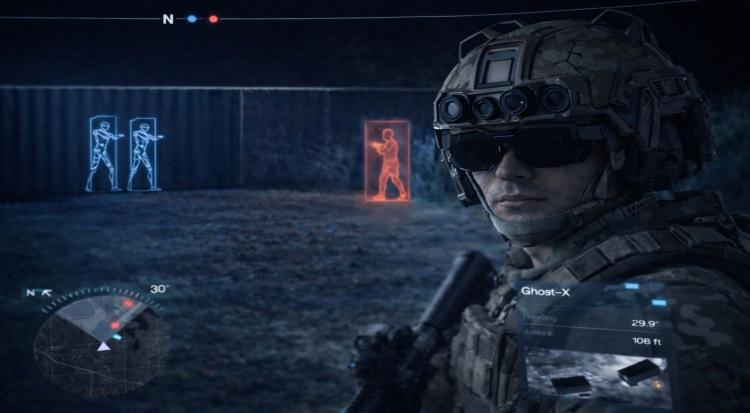
Anduril Industries' EagleEye is a groundbreaking AI-powered augmented reality helmet system unveiled in October 2025, transforming soldiers into high-tech operators on the battlefield. Founded by Palmer Luckey, the ex-Oculus pioneer, this modular "family of systems" builds on Anduril's Lattice AI platform to fuse data from drones, sensors, cameras, and teammate headsets into a unified 3D battlespace view. Production is underway, with about 100 units slated for U.S. Army delivery in Q2 2026 as part of the Soldier Borne Mission Command program.
Key Features
Wearers get real-time overlays marking friendlies in blue and enemies in red, including skeletal poses visible through walls via networked sensor data like thermal feeds. Rear and side sensors enable 360-degree threat detection and rearview mirror functionality, while spatial audio and radio frequency alerts pinpoint dangers. Configurations range from lightweight AR glasses for daytime to full-face VR-style helmets with night vision, passthrough, ballistic shielding, and blast mitigation—all ergonomically balanced to minimize cybersickness.
Partnerships and Availability
Collaborations with Meta, Qualcomm, Oakley, and Gentex ensure rugged performance, including drone control, minimaps, and mission marking. It's exclusively military-grade, tied to U.S. Army contracts worth billions, like a $159 million prototyping award within the $22B IVAS program—no public or civilian sales, and currently only for U.S. forces. Luckey envisions an open ecosystem where dozens of compatible headsets share data standards.
As the line between soldier and cyborg blurs, EagleEye raises a deeper question: is this the dawn of a safer, smarter battlefield—or the beginning of an era where algorithms decide who lives and dies? With recent threats from Donald Trump toward nations like Iran, Venezuela, and China—and the US’s history marked by wars in Iraq and Afghanistan, and unwavering military support for Israel’s genocide in Gaza—can we truly trust such technology in the same hands that have already reshaped so much of the world through violence? In 2026, the future of war may not just be fought by soldiers, but co‑authored by their machines.










