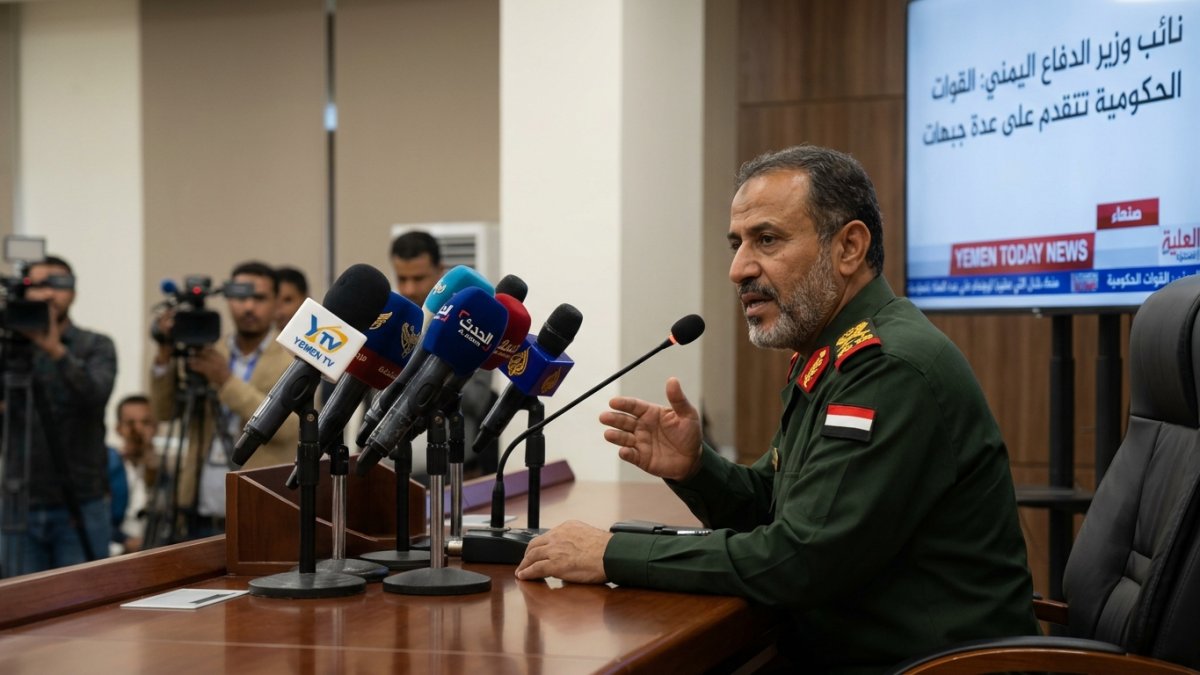
Yemen’s deputy defence minister says government-aligned forces are advancing on several fronts as the country’s conflict enters a renewed and uncertain phase. Major General Samir al-Sabri described the forces as having significant momentum and identified Hodeidah, Sanaa and Saada as areas receiving particular attention.
Sanaa remains a stated military objective
Al-Sabri said Sanaa, the capital held by the Houthis, remains a direct military target for government forces. He framed control of the Bab al-Mandeb Strait and Yemen’s western coastline as strategically important because of their links to regional and international affairs.
The deputy minister did not provide a timetable for an advance on the capital. He said operational timing and the need to cross areas near Sanaa were among the factors shaping the campaign. His remarks describe the government’s stated objectives; they do not independently confirm territorial changes or the outcome of ongoing operations.
Key fronts and wider stakes
Hodeidah’s importance reflects its location on the Red Sea coast, while Saada and Sanaa remain politically and militarily significant. The Bab al-Mandeb is a major maritime passage connecting the Red Sea with the Gulf of Aden, making developments along Yemen’s coast relevant beyond the country’s front lines.
Yemen remains divided between rival authorities and armed forces after years of conflict. Claims about advances can be difficult to assess while fighting continues, and no independent battlefield verification was available for the deputy minister’s account.
Any renewed push toward major population centres could carry risks for civilians and further complicate efforts to reach a political settlement. The military statements offer a picture of government priorities, but the situation on the ground may change quickly.