UK Rejects Slavery Reparations as Jamaica Urges King Charles to Act
The UK government has reiterated that it will not pay reparations for its role in the transatlantic slave trade, as Jamaica pushes forward with a legal challenge over Britain’s historical responsibility.
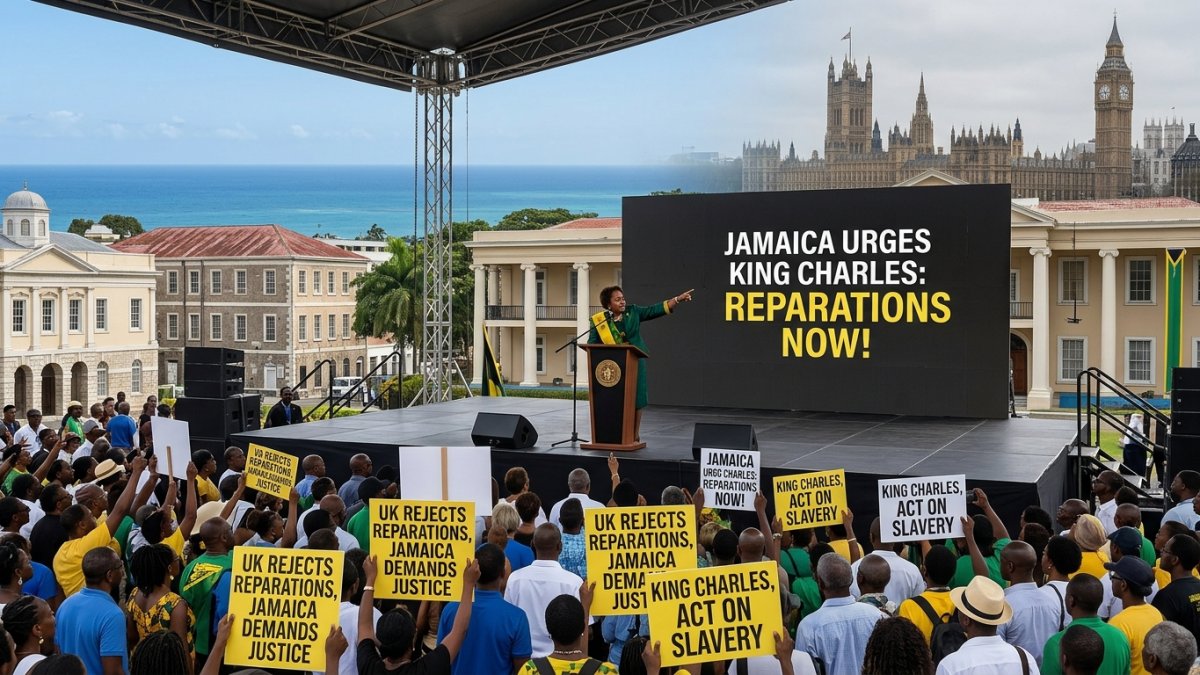
A Jamaican delegation has submitted a petition seeking the involvement of King Charles III and asking for legal questions surrounding slavery and possible compensation to be considered by the Judicial Committee of the Privy Council.
Jamaica Seeks Legal Answers
Jamaica wants the legal process to examine whether Britain’s involvement in the forced transportation and enslavement of Africans was unlawful and whether the UK has a legal obligation to provide reparations.
Culture Minister Olivia Grange has argued that the effects of slavery continue to influence Jamaica’s economic and social development, including areas such as education, healthcare and climate resilience.
The petition marks a shift in Jamaica’s campaign from political pressure toward a formal legal route. It has also received support from other Caribbean countries through CARICOM.
UK Rejects Reparations
Prime Minister Andy Burnham’s spokesperson said the UK government does not and will not pay reparations. British officials have argued that historical actions should be judged according to the laws that existed at the time.
King Charles has acknowledged the lasting impact of slavery and spoken about the importance of confronting historical injustices, but he has not endorsed financial reparations. The Palace has also stressed that the King must act on government advice in his constitutional role.
Jamaica’s move could further intensify debate over Britain’s colonial legacy and the country’s own plans to eventually become a republic and end its constitutional ties with the British monarchy.