Trump Threatens to Isolate Iran as China and Regional Neighbours Remain Key Trade Partners
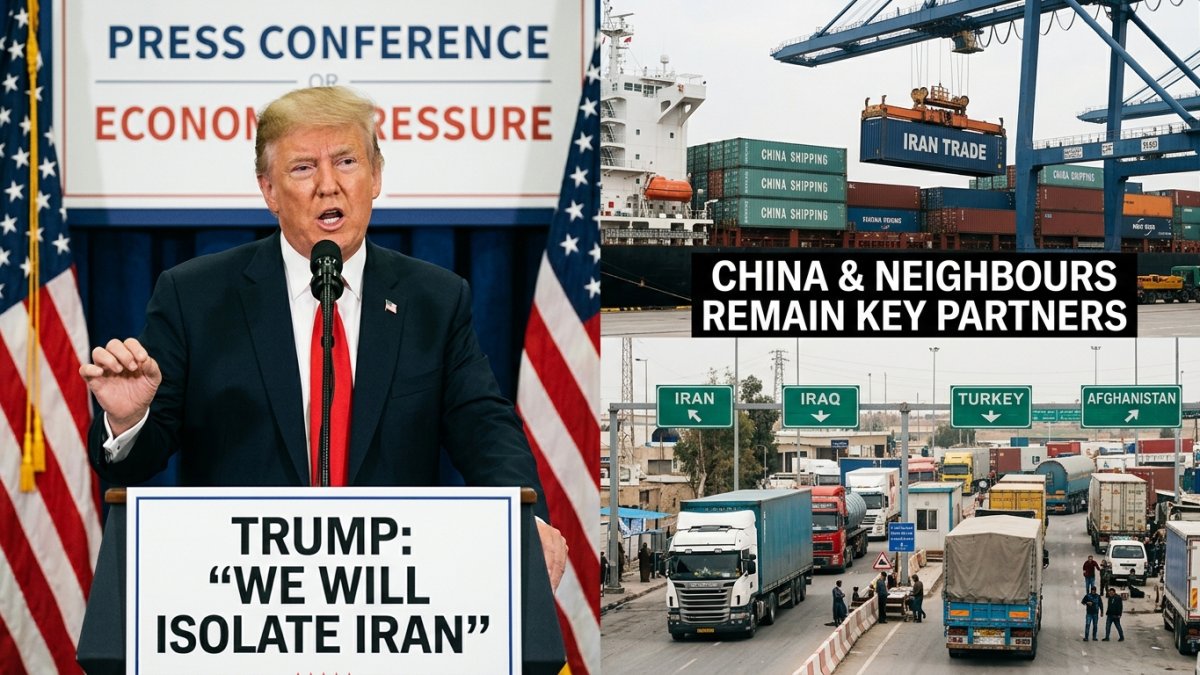
US President Donald Trump has threatened unprecedented economic pressure and isolation on Iran, warning countries that continue to support or trade with Tehran could face consequences. Such measures could affect several of Iran’s major trading partners.
China remains Iran’s most important economic partner and the biggest buyer of its oil. More than 80% of Iran’s shipped oil has been destined for China, with Chinese independent refiners buying discounted Iranian crude despite US sanctions. China purchased an estimated 1.38 million barrels per day of Iranian oil in 2025.
The UAE has historically been a major economic gateway for Iran, particularly through Dubai’s re-export trade and financial links. However, the UAE recently suspended financial and economic transactions with Iran amid rising military tensions.
Turkey maintains significant economic ties with Iran, including Iranian natural gas imports and Turkish manufactured goods exports. Bilateral trade is estimated at around $5–6 billion annually, while Iran supplies about 13% of Turkey’s gas imports.
Iraq recorded more than $10 billion in trade with Iran in 2025. Iranian food and consumer goods are important to the Iraqi market, while Iraq also relies heavily on Iranian natural gas for electricity generation, paying roughly $4–5 billion annually.
Oman, which has long maintained close diplomatic ties with Tehran and frequently acts as a mediator, recorded $1.5 billion in bilateral goods trade with Iran in 2025.
Pakistan is also seeking to expand bilateral trade with Iran toward a $10 billion target. While formal trade was previously restricted by sanctions, unofficial cross-border trade has remained significant, involving oil, food, medicines and agricultural products.
India’s trade with Iran has declined sharply since US sanctions intensified. Bilateral trade stood at about $1.63 billion in fiscal year 2025–26, with Indian exports—particularly cereals, tea, coffee and spices—making up most of the trade.
Iran also remains economically important to Armenia and Azerbaijan. Armenia relies on Iran for part of its regional trade and maintains a gas-for-electricity arrangement, while trade between Azerbaijan and Iran increased during the first half of 2026.
Trump’s proposed economic campaign against Iran could therefore extend well beyond Tehran, putting pressure on countries that depend on Iranian oil, gas, goods or transit routes.