Taliban Builds Regional Alliances Despite Lack of Full Inter
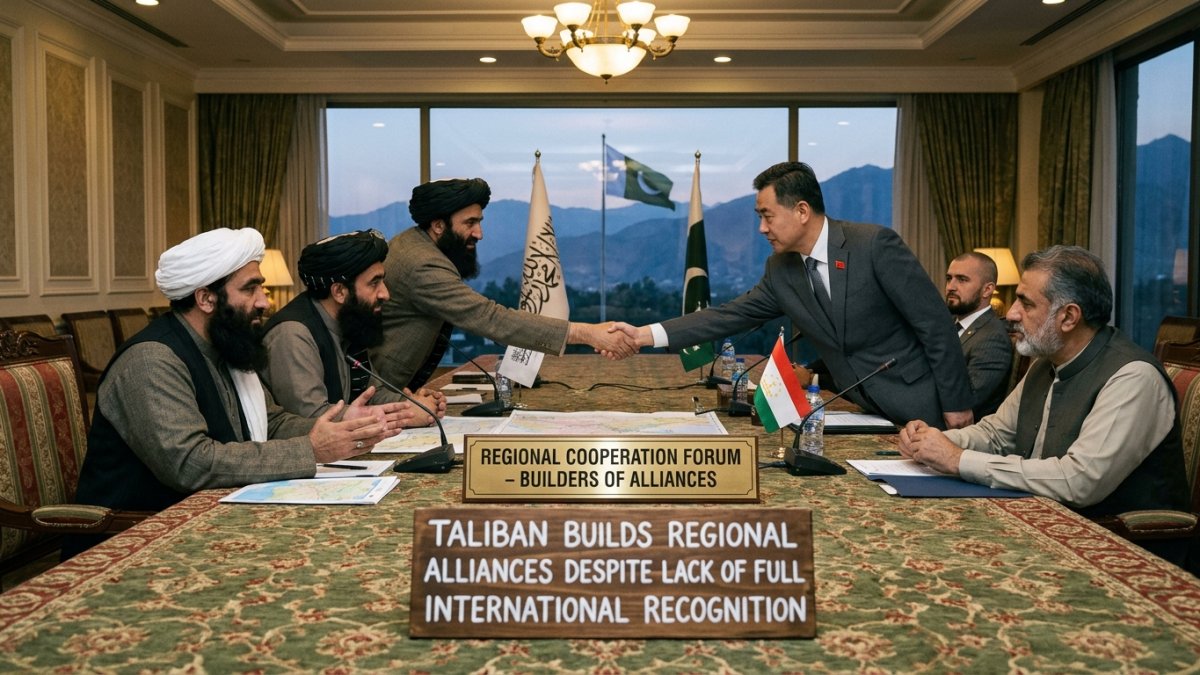
Five years after returning to power, the Taliban government has expanded Afghanistan’s diplomatic, trade and security relationships despite remaining largely unrecognised internationally.
Russia became the first country to formally recognise the Taliban government in July 2025, but most countries continue to withhold full recognition. Nevertheless, Kabul now maintains relations with more than 40 diplomatic missions and has strengthened cooperation with several regional powers.
China has become one of the Taliban’s most important partners, maintaining its embassy in Kabul and pursuing cooperation in mining and investment. A major focus is the Logar copper project, linked to a Chinese investment agreement worth billions of dollars.
Relations with Pakistan, once considered a key Taliban ally, have deteriorated sharply. Disputes over the Tehrik-i-Taliban Pakistan (TTP), border security and trade have pushed Kabul to diversify its commercial routes through Iran and Central Asia rather than relying heavily on Pakistani ports.
Uzbekistan has expanded economic cooperation with Kabul, signing trade agreements worth about $520 million in 2026. A proposed railway connecting Uzbekistan to Pakistan through Afghanistan could provide Central Asian states with access to the Arabian Sea. Turkmenistan is also pursuing cooperation through the long-delayed TAPI gas pipeline.
Security concerns are another major factor behind regional engagement. Russia and Central Asian countries view the threat from ISIL as a reason to maintain working relations with the Taliban, which they believe has helped maintain control over Afghanistan's borders.
Iran and India are also pursuing pragmatic engagement. Iran offers Afghanistan access to Chabahar port for trade, while India is rebuilding ties partly to counter Pakistani and Chinese influence. Gulf states including Qatar, Saudi Arabia and the UAE have also maintained diplomatic channels with Kabul.
The Taliban's strategy therefore appears focused on practical cooperation rather than waiting for broad international recognition. By balancing relationships with competing regional powers, Kabul is seeking economic opportunities, security cooperation and greater diplomatic legitimacy.
national Recognition