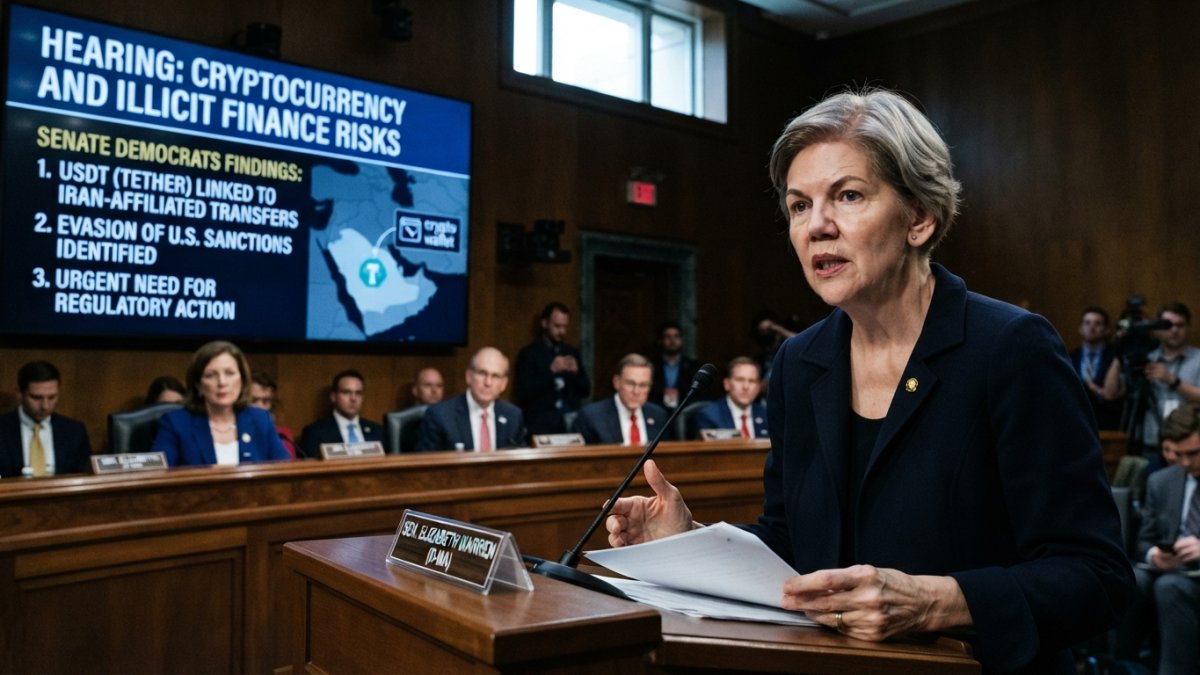
A report led by Senate Democrats says Tether’s USDT stablecoin appeared in most of a group of cryptocurrency wallets sanctioned by the United States and Israel in connection with Iran.
The review examined 846 wallets. It found that 84 percent had transacted in USDT, which the report said could help Iranian authorities move funds across borders and support the country’s currency despite US sanctions. The report also raised concerns about financing for groups aligned with Iran, including Hezbollah.
Calls for scrutiny
Senator Richard Blumenthal, the senior Democrat on the Senate Permanent Subcommittee on Investigations, said the findings warranted scrutiny of Tether’s role in Iran’s shadow banking activity. He called on the Treasury and Justice departments to investigate the company.
The report’s figures cover wallets that had been sanctioned by the US and Israel in connection with Iran; they do not establish that every transaction involving those wallets was unlawful or directed by the Iranian government.
Tether’s response
Tether said it cooperates with US authorities and supports efforts to freeze illicit funds. The company said it had backed the freezing of nearly $550 million in USDT linked to Iran during 2026. Its chief executive, Paolo Ardoino, rejected the characterization of the token as a haven for sanctioned actors or criminal networks.
USDT is a dollar-backed stablecoin, a type of cryptocurrency designed to track the value of the US dollar. The dispute centers on how widely such tokens can be used across borders and how effectively issuers and regulators can prevent sanctioned entities from accessing them.