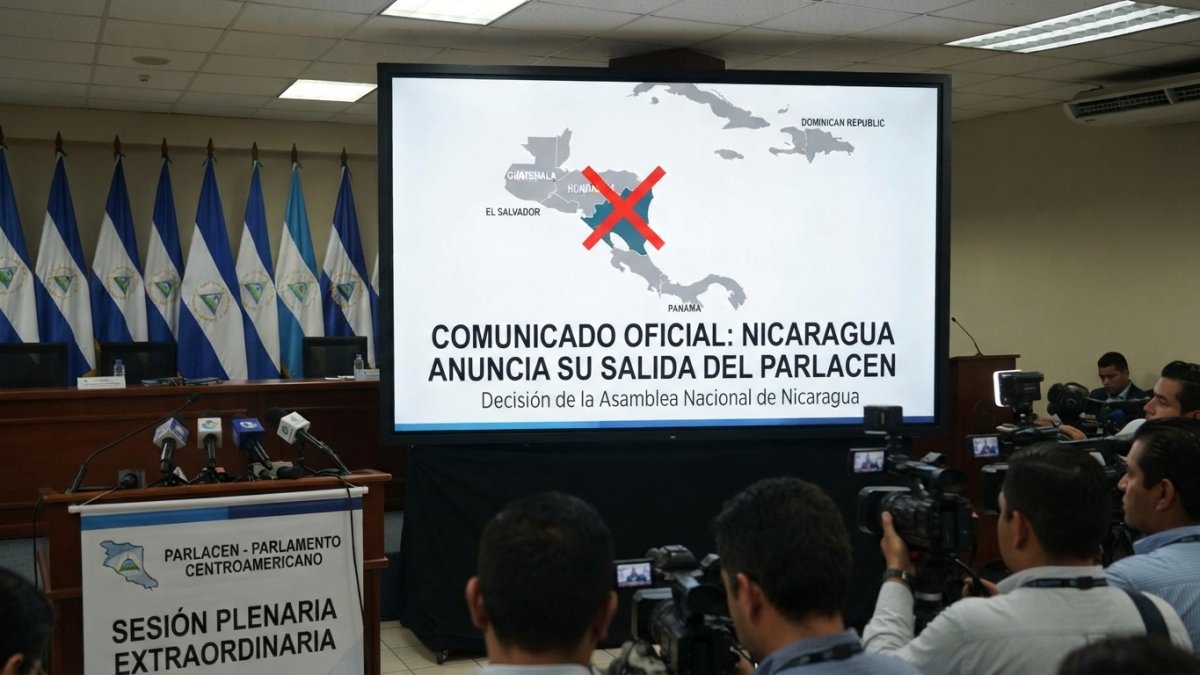
Nicaragua’s government has announced an immediate withdrawal from the Central American Parliament, a regional body whose six member states work on political cooperation and democratic issues. The decision was announced by the Foreign Ministry on Saturday, October 3.
Managua Cites National Sovereignty
The government said leaving the parliament was an exercise of Nicaragua’s sovereignty. President Daniel Ortega and co-president Rosario Murillo’s administration has argued that international organisations use human-rights criticism to interfere in the country’s internal affairs.
The announcement came a day after the Organization of American States adopted a resolution calling on Nicaragua to restore civil rights and free political prisoners. The government’s withdrawal from the regional legislature takes effect immediately, according to its statement.
A Pattern of Departures
Nicaragua left the Organization of American States in 2023 and withdrew from the UN Human Rights Council in 2025 after both bodies criticised its record. The Ortega-Murillo government has faced allegations of detaining opponents and restricting dissent. A United Nations report released in September said at least eight people had died in custody since a crackdown began in 2018.
Nicaragua’s latest departure further narrows its formal participation in regional institutions and deepens a dispute over the role of outside organisations in monitoring rights and democratic standards.