A world on trial: How lawyers documenting Israeli abuse pay a price
A growing body of evidence documenting alleged abuses against Palestinians has come with a heavy cost for the lawyers and human rights defenders collecting it, who face harassment, legal pressure, sanctions, and even violence.
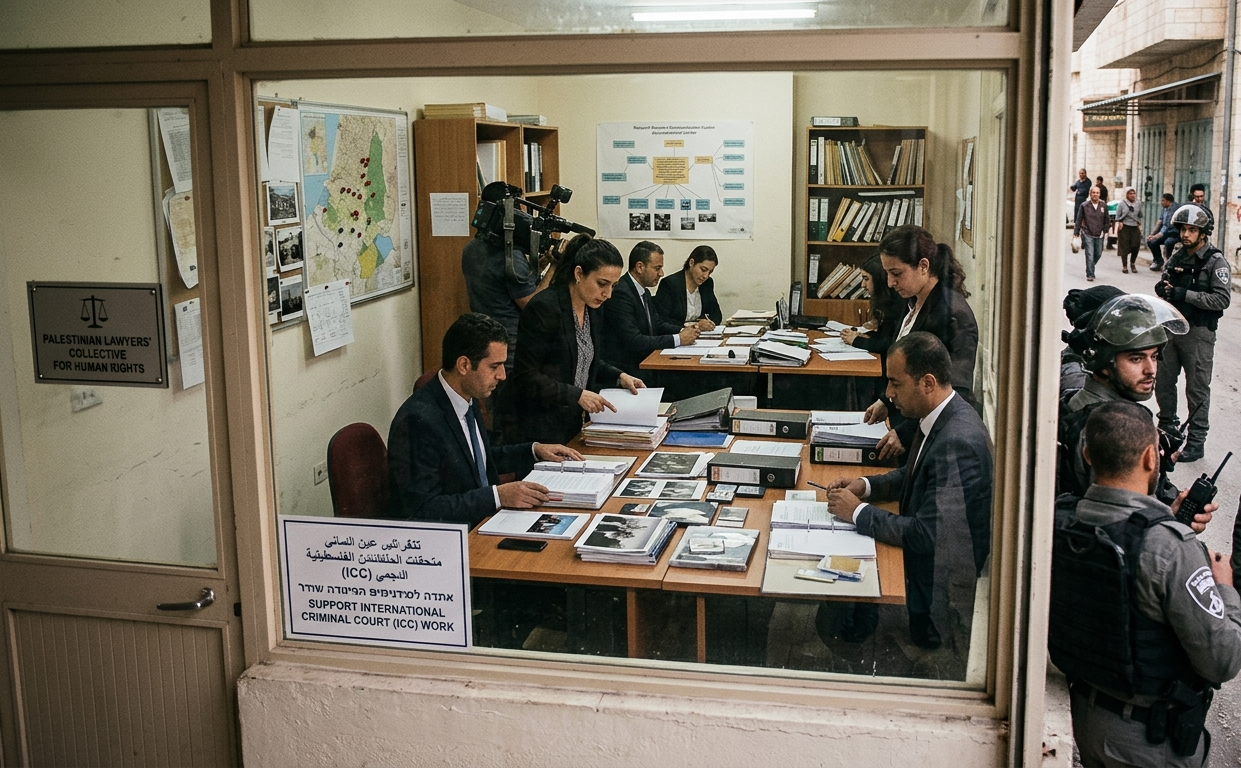
The investigation process often begins on the ground in Gaza or the occupied West Bank, where fieldworkers record testimonies, document injuries, and preserve evidence of alleged torture, killings, and destruction of property. Palestinian legal groups such as Al-Haq and Defense for Children International-Palestine have spent years compiling such material for international courts, including the International Criminal Court (ICC).
However, many of these organisations have faced raids, closures, and terrorism designations by Israeli authorities, which rights groups and UN experts have condemned as attempts to silence documentation efforts. Their offices have been shut down, staff targeted, and their work increasingly criminalised.
The ICC itself has also come under intense political pressure. Former prosecutor Fatou Bensouda and current officials have described surveillance, intimidation, financial restrictions, and sanctions linked to investigations into alleged war crimes in Palestine. Similar pressure has extended to UN officials and human rights experts who have reported abuses.
Despite this, lawyers and advocacy groups continue building legal cases, arguing that accountability for alleged violations is essential. But they warn that international justice is being weakened by political retaliation, even as new settlements expand in the West Bank and violence continues in Gaza.