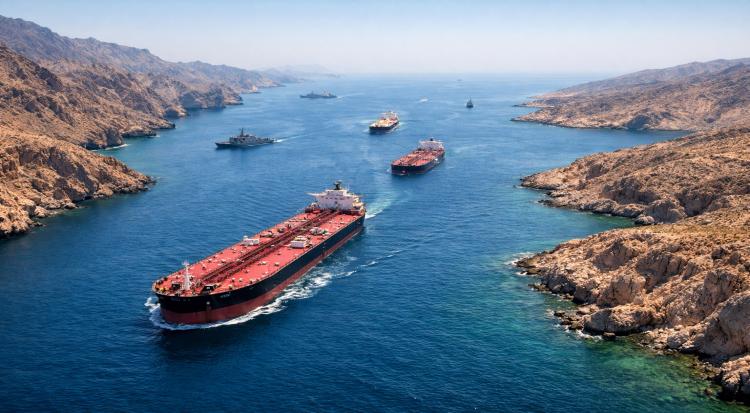
Iran has effectively moved to restrict passage through the Strait of Hormuz amid escalating conflict following joint US–Israel strikes, raising alarm across global energy and shipping markets.
Maritime security agencies reported that vessels in the area received radio warnings from Iran’s Revolutionary Guard Corps stating that no ships were permitted to transit the strait. European naval officials confirmed that commercial vessels received the transmissions. While Tehran has not issued a formally declared legal closure under international maritime law, shipping advisories and military warnings have significantly disrupted traffic through the narrow waterway.
The Strait of Hormuz is one of the world’s most critical energy chokepoints. Roughly 20–25% of global seaborne oil trade, estimated at up to 20 million barrels per day, passes through the strait, along with a substantial share of the world’s liquefied natural gas exports. Even partial disruption can send oil and gas prices sharply higher.
Energy traders and shipping firms have already reported suspensions or delays in Gulf transits, while insurers have raised war-risk premiums for vessels operating in the region. Analysts warn that prolonged instability in the strait could severely disrupt global supply chains and financial markets.
The tensions come amid a substantial US naval presence in and around the Gulf, including aircraft carrier strike groups and escort vessels deployed in recent weeks. Iran has previously threatened to restrict or close the strait during periods of confrontation, viewing it as a key point of strategic leverage.
With no alternative maritime route capable of fully replacing the volume that moves through Hormuz, any sustained restriction would carry immediate global economic consequences.