Elon Musk and the Rise of Far-Right Racial Politics
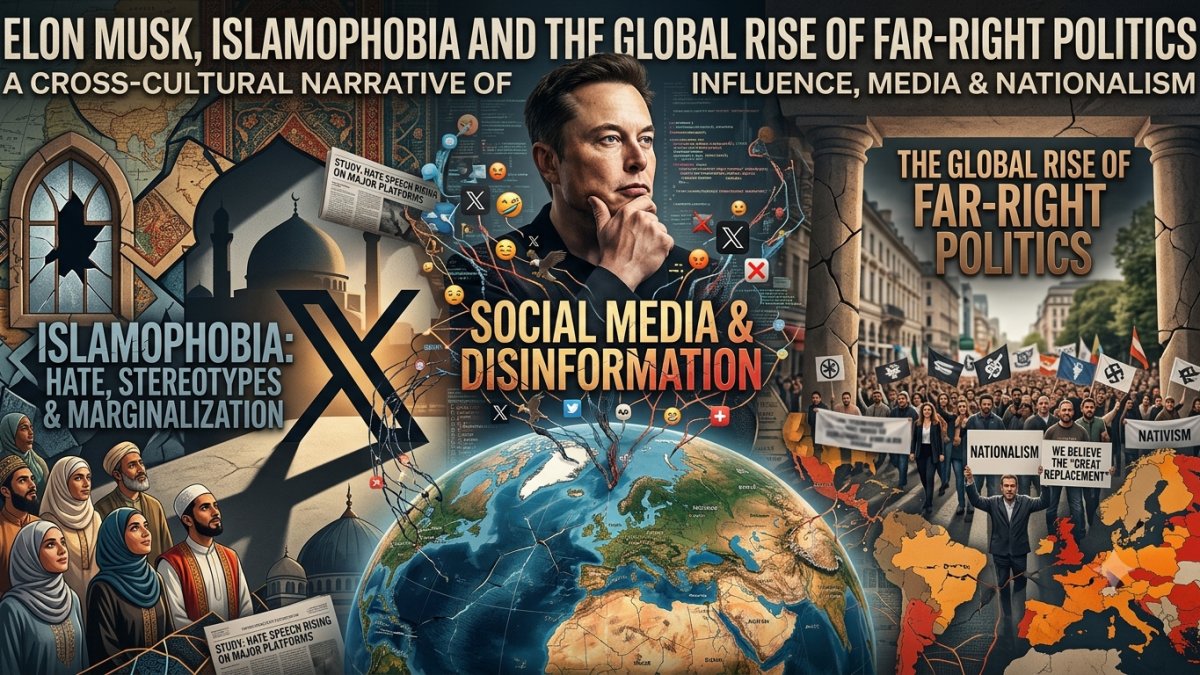
Elon Musk has repeatedly rejected accusations of racism, but critics argue that the more important question is not how he describes himself, but how his political influence affects public debate.
In a recent interview, Musk rejected the idea that he is anti-Muslim while repeating claims linking Muslims with violence, incompatible values and threats to Western society. Critics say such arguments turn an extremely diverse religious population into a single threatening group and reinforce anti-Muslim stereotypes.
Musk has also promoted ideas about demographic decline and what is often called the “Great Replacement” theory. His public comments about falling white populations and the importance of having more children have attracted criticism from researchers who see elements of racial thinking and eugenic ideology in these arguments.
His influence extends beyond social media commentary. Musk has financially supported Donald Trump, endorsed right-wing and far-right political movements in several countries and used X to amplify controversial political figures and activists.
Critics argue that his ownership of a major social media platform gives him unusual political power. Restoring banned accounts, promoting particular political movements and repeatedly amplifying inflammatory content can shape what millions of people see and discuss.
Musk has also warned of potential civil conflict and spoken about violence as something people may eventually have to confront. His promotion of content portraying migrants as threats has further intensified concerns about the consequences of his rhetoric.
The article argues that this makes Musk more than a wealthy political commentator. His combination of enormous financial resources, control of a major communications platform and political influence allows him to amplify narratives about race, immigration and cultural conflict on a global scale.
Whether Musk personally considers himself racist, the argument concludes, is less important than the political consequences of the ideas he promotes.
The central concern is that repeated claims portraying Muslims, migrants or demographic change as existential threats can deepen social divisions and make political or racial violence appear increasingly acceptable.