China’s Ethnic Unity Law Expands Overseas Legal Reach, Raising Human Rights Concerns
China’s new Law on the Promotion of Ethnic Unity and Progress has officially taken effect, granting Beijing the authority to pursue legal action against individuals and organisations overseas accused of undermining the country’s ethnic unity.
The legislation, passed in March, has drawn criticism from human rights organisations and UN experts, who argue it could be used to justify forced assimilation policies in regions such as Xinjiang and Tibet rather than promote ethnic harmony.
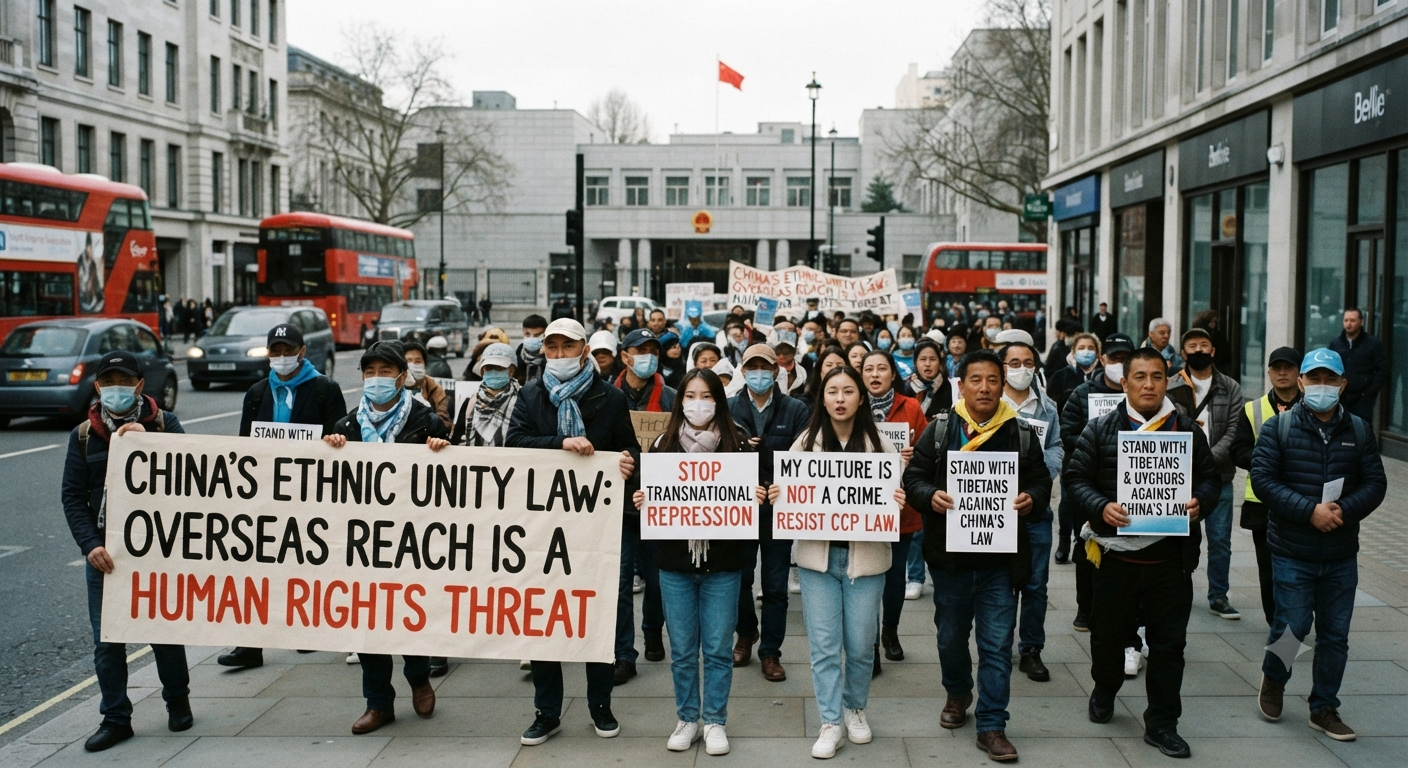
A key provision, Article 63, extends the law’s reach beyond China’s borders, allowing authorities to seek legal responsibility against foreign-based individuals or groups accused of encouraging ethnic division. Amnesty International warned the measure could be used to target overseas activists and minority rights advocates.
Chinese officials defended the law, describing it as lawful and necessary while rejecting claims that it represents an expansion of Beijing’s extraterritorial authority.
The legislation has also raised concerns in Taiwan, where officials urged citizens to exercise caution when travelling to or living in China amid fears the law could be used against supporters of Taiwanese independence.