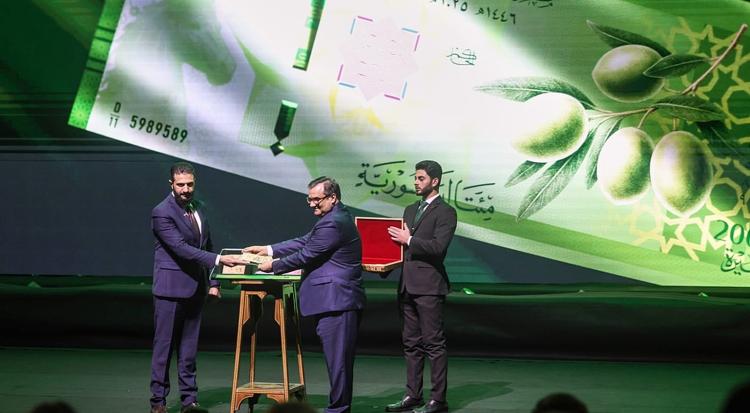
Syria's interim President Ahmed al-Sharaa unveiled redesigned banknotes at a Damascus ceremony on Monday, erasing images of ousted leader Bashar al-Assad and his father Hafez al-Assad to signal a break from the past. The notes, entering circulation on January 1, come in denominations of 10, 25, 50, 100, 200, and 500 Syrian pounds after lopping off two zeros from existing bills.
Featuring Syria's iconic agricultural symbols like roses, wheat, olives, oranges, and mulberries, the bills replace prior political figures. Al-Sharaa described them as "the end of a previous, unlamented phase and the beginning of a new phase that the Syrian people aspire to," per state news agency SANA. He called the design an expression of a fresh national identity, free from individual veneration.
Central Bank Governor Abdul Qader Hosriya said the exchange will wrap up within 90 days, possibly extended, under a 2025 presidential decree giving the bank flexibility on deadlines and sites. Both old and new notes will circulate together during this period, with 100 old pounds swapping for 1 new one—without altering the currency's real value. Al-Sharaa noted that shedding zeros eases daily transactions but won't fix the economy alone. "Improving the economy depends on boosting production, cutting unemployment, and strengthening banks, which are the economy's arteries," he said. He urged calm to avoid panic, warning that rushing exchanges could weaken the pound's rate.
The Syrian pound has cratered since the 2011 civil war began. It traded at 47 pounds per US dollar in March 2011, slid to 515 by July 2017, hit 7,500 in April 2023 amid Lebanon's liquidity crisis, reached 15,000 later that year, and bottomed at 25,000 during the 2024 opposition offensive that toppled Assad. It now hovers around 11,000 per dollar, forcing people to lug bags of cash for basics—pushing many toward dollars.
Past 2,000-pound notes showed Bashar al-Assad, who ruled nearly 25 years before fleeing to Russia in December 2024; 1,000-pound notes featured Hafez al-Assad, father of Bashar, who ruled from 1971 until his death in 2000. Assad-era policies since the 1980s fueled corruption and authoritarianism, morphing into a "war economy" of warlords and cronies after 2011. The 13-year conflict spiked unemployment, axed subsidies, and drew Western sanctions that choked trade.
From 2020, rebel areas ditched the Syrian lira for Turkish lira (and dollars for big deals) due to its collapse, while regime zones stuck with it. Assad's fall unified the country under one government, making a single new currency essential to end the divide.