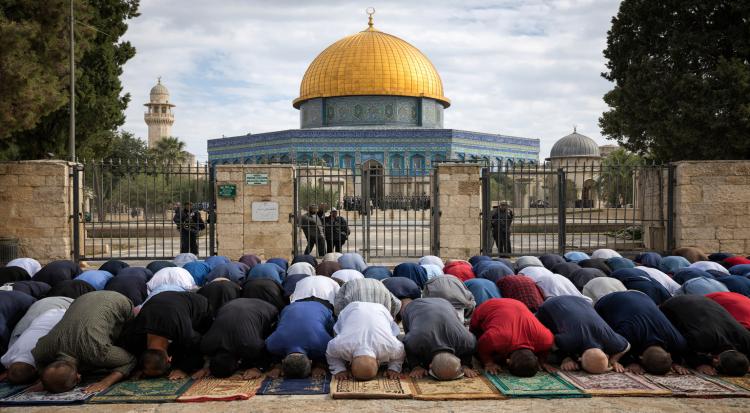
Jerusalem’s Al‑Aqsa Mosque — one of Islam’s holiest sites — remained closed during Eid al‑Fitr on March 20, 2026, marking the first time it was inaccessible on the festival since 1967. Israeli authorities cited security concerns tied to the ongoing conflict in the Middle East as the reason for the unprecedented closure to Muslim worshippers.
Hundreds of worshippers were forced to pray outside the barricaded gates of the Old City, with entrances to the mosque’s compound tightly sealed by Israeli police and security forces. Roads and businesses within the Old City were also restricted, contributing to a subdued atmosphere as worshippers marked the end of Ramadan.
The closure had been anticipated earlier in March, with initial reporting indicating that Israeli authorities intended to keep the mosque shut through Eid and possibly beyond. That projection was borne out when Al‑Aqsa did in fact remain inaccessible for Eid prayers.
Palestinian leaders and religious figures condemned the move as a violation of religious freedoms, while several international organizations, including the Arab League and the Organisation of Islamic Cooperation, criticized the restrictions as a potential escalation in efforts to limit Muslim worship at the site.
The closure of the compound, traditionally filled with tens of thousands of worshippers during Eid, heightened tensions in a city already strained by concurrent regional conflict and security restrictions. Continued restrictions on access to Al‑Aqsa could affect future religious observances and contribute to wider unrest.