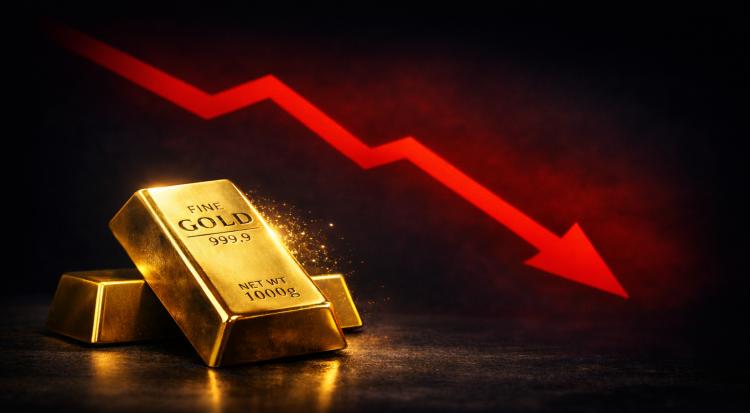
Gold prices crashed on January 30, 2026, falling as much as 8.3% in their sharpest one-day decline in over a decade, erasing much of a blistering January rally. Spot gold settled around $4,907 per ounce after hitting a record $5,626 year-high the previous day, while futures tested lows near $4,700 amid extreme volatility.
The yellow metal had surged more than 20% in January alone—its best monthly gain in decades—driven by safe-haven demand amid geopolitical tensions, U.S. political uncertainty, and debt fears under President Trump. Silver suffered even more dramatically, plunging 17% peak-to-trough from $120 to $95 per ounce in its wildest session since 2020.
Investors piled into profit-taking after the unsustainable run, with gold's daily trading range spanning nearly $800—from $5,480 highs to $4,700 lows. Mining stocks followed suit: Newmont dropped 11.5%, while silver ETFs like ProShares Ultra Silver cratered 25%.
Friday's rout rivals April 2013's infamous 9% gold plunge and marks one of silver's worst days ever. Despite the carnage, gold remains up 18% year-to-date and 82% from last January, buoyed by central bank buying. Analysts expect near-term consolidation, with debt concerns potentially limiting further downside.