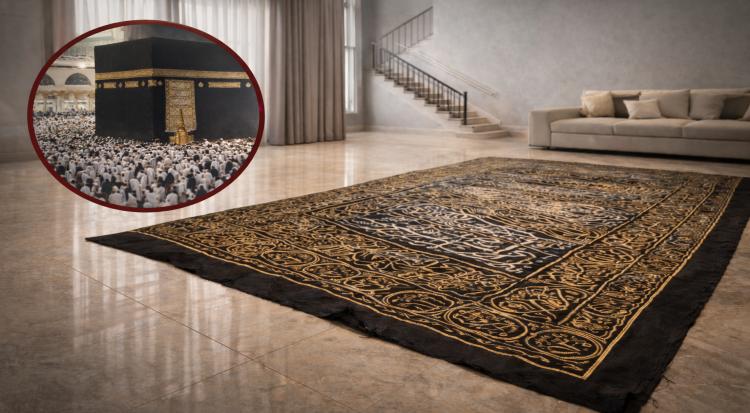
Newly released court documents from the Jeffrey Epstein case reveal the financier used a piece of the Kaaba's kiswah—the sacred black cloth covering Islam's holiest site in Mecca—as a rug in his Manhattan townhouse, sparking outrage among Muslim communities worldwide. Photos from the 2019 FBI raid show the embroidered fabric, bearing Quranic verses, laid out in Epstein's private "temple" room alongside other bizarre decor.
UAE-based businesswoman Aziza al-Ahmadi coordinated delivery of the kiswah with Abdullah al-Maari, facilitating Epstein's acquisition of the priceless artifact. The kiswah, entirely replaced every year during Hajj pilgrimage in a complex ceremony where the old cloth is cut into small pieces distributed to dignitaries, donors, or museums, holds immeasurable spiritual value—making Epstein's large intact piece especially sacrilegious.
Islamic leaders worldwide condemned the act as intentional blasphemy, demanding investigation into Epstein's Middle East network. They explained that walking on Quranic verses—the verbatim word of God in Islam—is profound disrespect. Muslims traditionally keep Quran high on shelves, never on floors, making this desecration especially grave.
The 2026 document unsealing amid civil litigation highlights his global connections, including intelligence ties. No specific charges arose from the cloth itself, but it exemplifies Epstein's collection of provocative religious items symbolizing dominance over sacred traditions.