
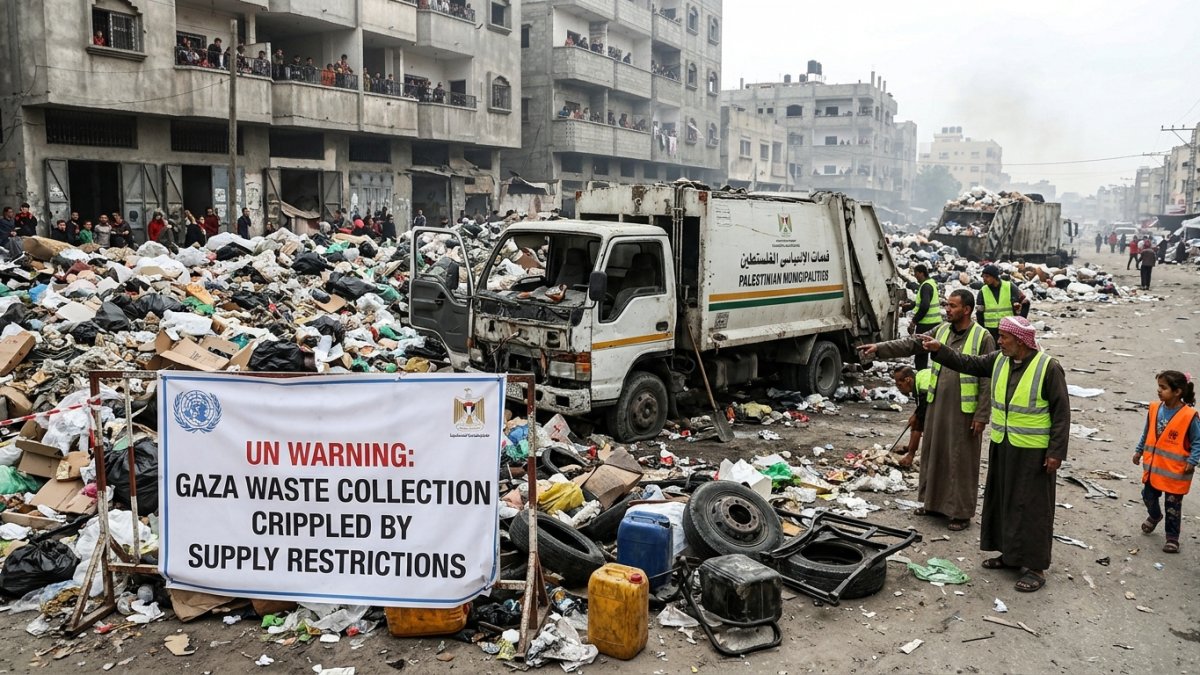
Waste collection across Gaza has been severely disrupted because restrictions on supplies have left only around half of the territory’s collection vehicles operational, a United Nations spokesperson said. Municipal teams are struggling to keep up with rubbish as shortages of engine oil, spare parts and other essential items limit repairs and daily operations.
The backlog creates growing public health concerns, particularly in crowded areas where displaced families live close to accumulated waste. Irregular collection can attract pests, contaminate nearby areas and place additional pressure on communities already facing damaged water and sanitation systems. Some waste is being removed, but available capacity remains far below what is needed.
The UN has called for wider access to critical supplies and more reliable entry routes for humanitarian and municipal equipment. Aid agencies say funding constraints also affect their ability to maintain essential services. The restrictions on spare parts and fuel-related items make routine repairs more difficult and can leave vehicles idle even when crews are available.
Restoring waste services will require consistent access to supplies, functioning equipment and support for local authorities. Without those measures, sanitation problems are likely to deepen, compounding the risks facing residents as Gaza’s basic infrastructure remains under severe strain.