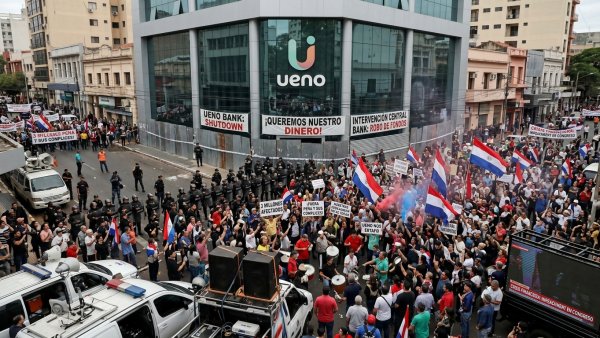

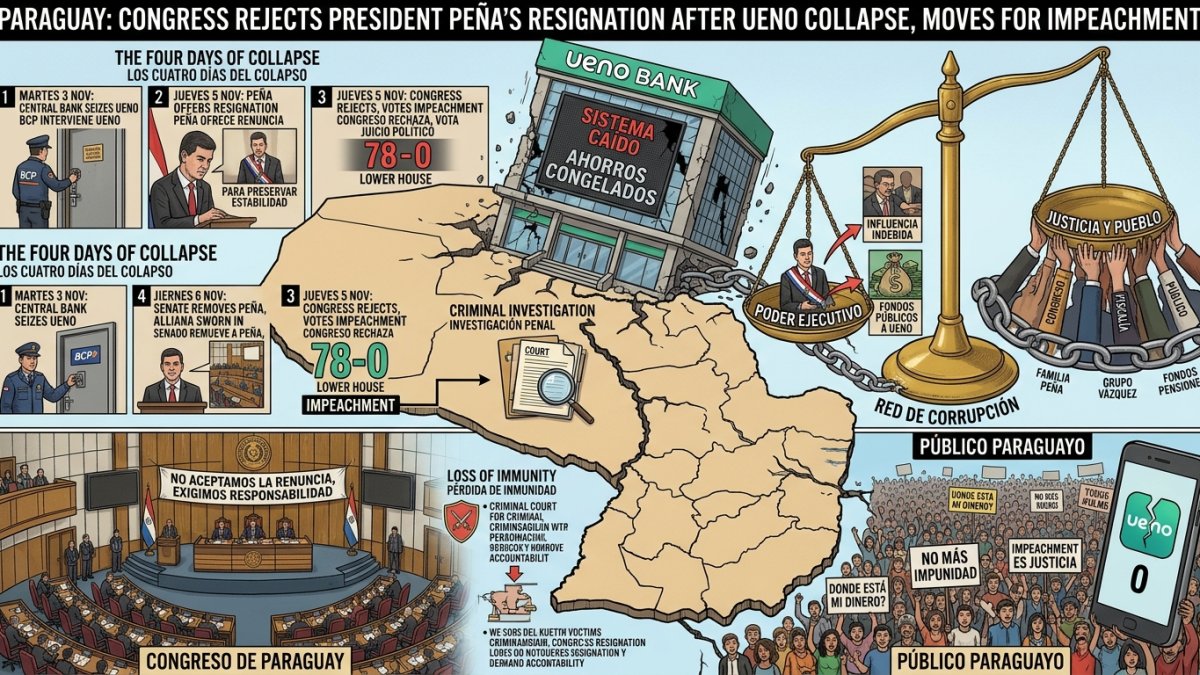
Paraguay’s Congress has rejected President Santiago Peña’s attempt to resign and is moving ahead with impeachment proceedings following the collapse of digital lender Ueno Bank. Millions of customers have been unable to access their accounts since regulators intervened in the institution.
Peña announced his resignation in a recorded address, saying he wanted to protect the country’s stability and democratic institutions. Lawmakers did not accept it. The lower house voted 78–0 to impeach him, while the Senate opened proceedings and summoned him to respond to the allegations.
The political crisis follows the central bank’s finding that Ueno had fallen below the required solvency ratio. After adjustments to its books, the bank’s capital was less than half the legal minimum. The lender had around three million customers and administered substantial public funds. Paraguay’s central bank has since resigned its chief, and the attorney general has ordered investigations into the collapse and its oversight.
Peña formerly held a stake in Ueno’s parent company, Grupo Vázquez, but says he sold his shares in 2025. Lawmakers have raised conflict-of-interest and possible cover-up concerns; these remain allegations under investigation. If impeached and convicted, Peña could lose the lifetime Senate seat and legal protections normally granted to former presidents. The vice president would take over if Peña were removed.