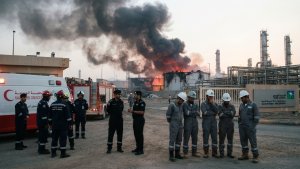
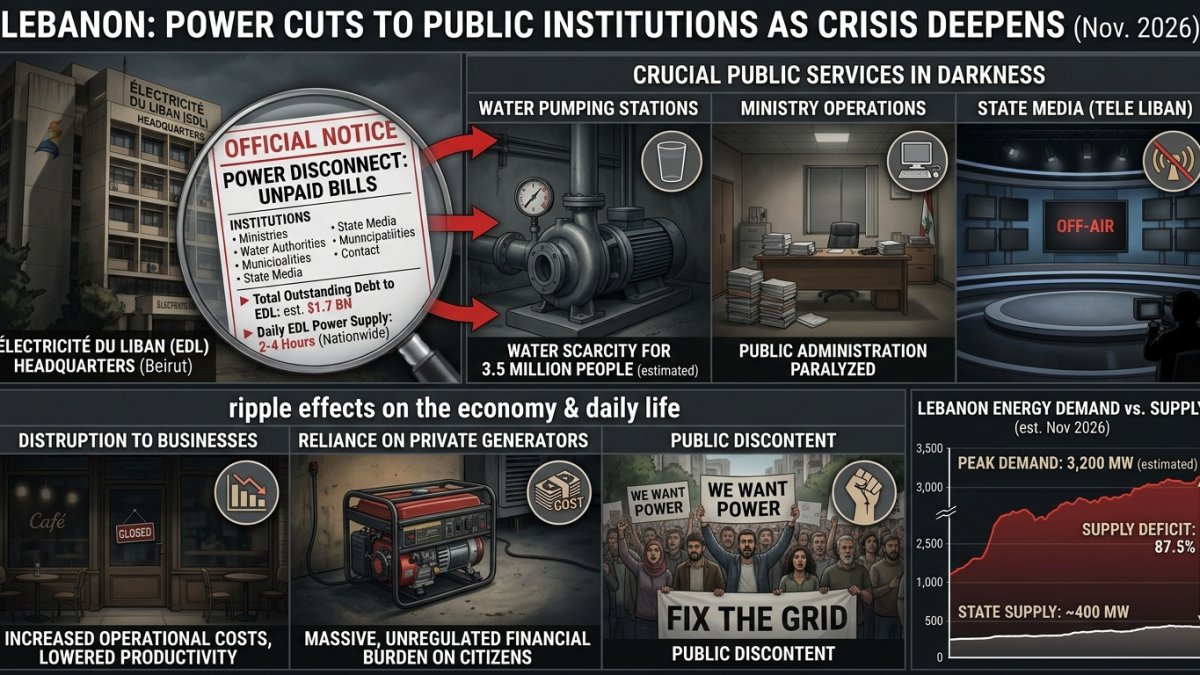
Lebanon has begun cutting electricity to about 100 public institutions that have not paid outstanding bills, the energy ministry said, adding pressure to already strained government services. The move comes as the state electricity company struggles with limited fuel, ageing infrastructure and years of financial and administrative problems.
Energy Minister Joe Saddi has been pressing the government to address the sector’s needs and the debts owed to the state power company. His dispute with other officials has led him to boycott cabinet meetings, according to local reporting. The ministry’s action is intended to collect revenue, but it may disrupt services at affected public facilities if the debts are not settled or alternative arrangements are made.
Lebanon’s state electricity supply has sharply declined since the financial crisis that began in 2019. Many households and businesses now depend on private generators to fill long daily gaps in public power, adding costs for residents already coping with a weakened economy.
Qatar has discussed potential support for Lebanon’s energy sector, including solar projects, new generating capacity and liquefied natural gas supplies. Those proposals have not yet resolved the immediate shortages. The latest cuts highlight how unpaid bills and fuel constraints continue to affect both public services and efforts to reform the electricity system.