
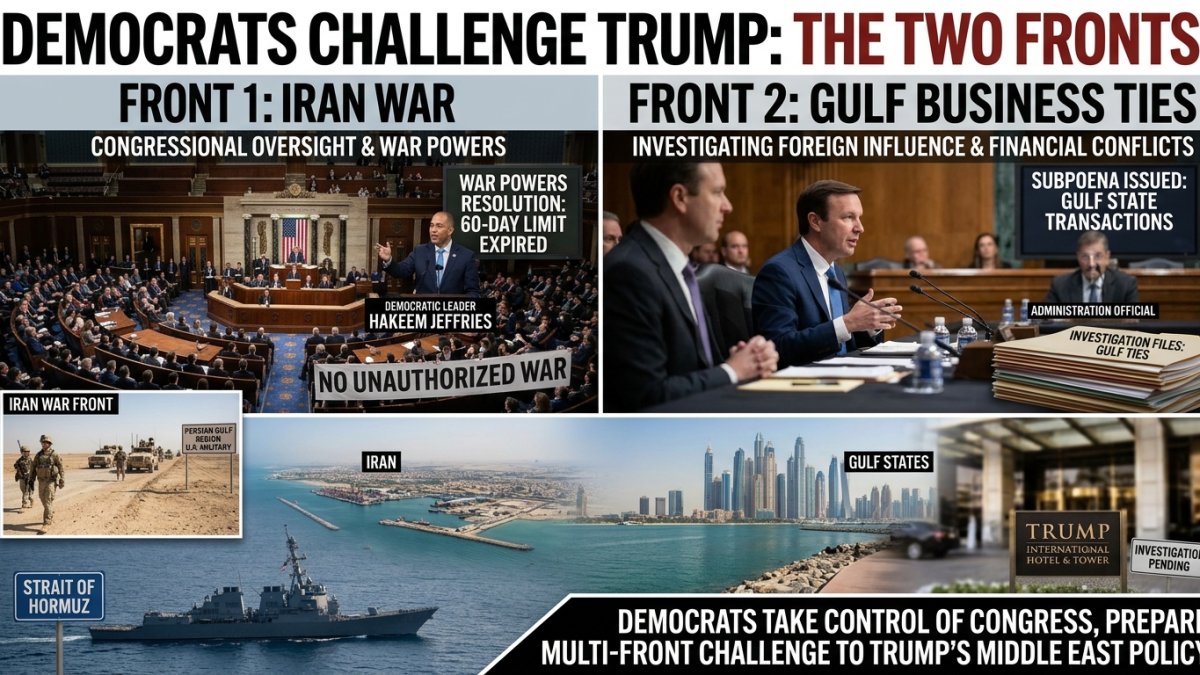
Democrats are preparing to use their new control of Congress to challenge President Donald Trump’s Middle East policies, including the war with Iran, military assistance to Israel and reported business connections involving his family in the Gulf. The plans could bring questions of war powers and federal spending into sharper focus when the new Congress convenes in January.
Democratic candidates won majorities in both the House and Senate in the midterm elections, flipping several previously Republican-held seats. The result came nine months into the Iran war. A pre-election survey found that about one-third of respondents considered the conflict a crucial factor in their vote, while rising fuel costs also featured in the campaign.
Democrats are considering ways to limit or scrutinise funding for the war and to revisit aid to Israel. They have also raised the prospect of investigating Gulf business ties involving Trump’s family. These are potential oversight and legislative efforts; their scope and likelihood of passing remain uncertain.
The shift in Congress could increase pressure on the administration, but it does not automatically end the conflict or dictate foreign policy. Any effort to restrict military action or spending would face political and procedural hurdles, as well as the possibility of a presidential veto.