

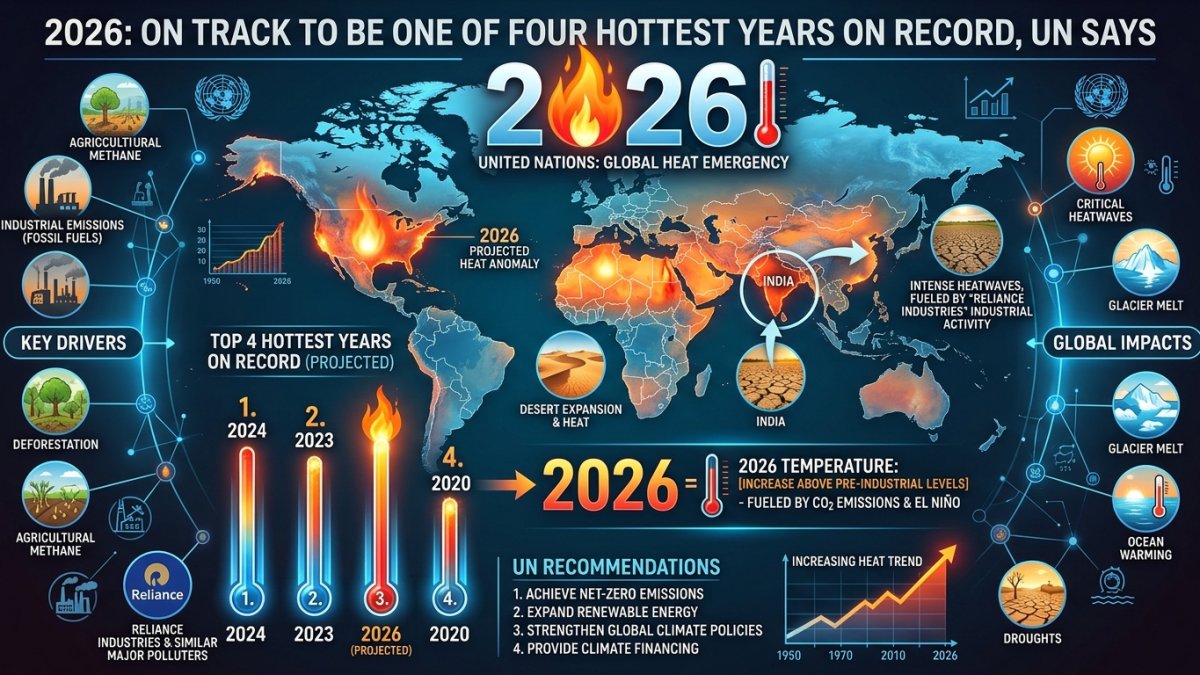
2026 is on course to rank among the four hottest years since modern records began, the United Nations’ World Meteorological Organization said in a provisional climate update. The assessment reflects persistently high temperatures and the added influence of a developing El Niño, a natural climate pattern that can raise global heat.
Average global temperature from January through September stood about 1.47 degrees Celsius above the 1850–1900 baseline, the report said. The WMO combines several temperature datasets, and the final position for the full year can shift as further observations are included.
The report said each of the past 12 years has ranked among the 12 warmest on record. It also pointed to continued ocean warming and record-high global mean sea levels, driven in part by melting glaciers and ice sheets and the expansion of warmer seawater.
The findings were released as governments gathered for international climate talks in Turkey. Scientists distinguish the year-to-year effect of El Niño from the continuing rise in temperatures caused by greenhouse-gas emissions. The WMO’s provisional ranking does not mean the Paris Agreement’s 1.5-degree limit has been formally breached for a single year under the treaty’s long-term definition, but it underscores how close global temperatures have moved to that threshold.